Water Damage Stucco Repair Costs: A Step-by-Step Guide to Budgeting Right
If you have gathered quotes for water damage stucco repair, you already know the frustrating part: three contractors, three numbers, and no explanation of why they are so far apart. One bid covers a surface patch. Another includes tearing out wet sheathing. A third assumes the whole wall needs replacement. None of them tell you which assumption is right for your wall. Understanding the stucco water damage cost for your specific situation is critical. This guide walks you through the process step by step, so you can read a quote, understand what moisture damage actually costs, and avoid paying twice for the same repair.
The steps below apply whether you are a Scottsdale homeowner with a stained wall under a leaky scupper, or an HOA board budgeting reserve funds for a shared perimeter wall that has been soaking up irrigation overspray for a decade.
Step 1: Confirm the Damage Is Actually Water-Related
Before you spend anything, verify that moisture is the problem. Water damage behind stucco shows up differently than ordinary cracking, and the repair path is different too.
Look for these signs on the wall itself:
- Soft or spongy spots when you press on the stucco
- Dark staining that reappears after rain or irrigation runs
- Bubbling, buckling, or stucco that flakes off in sheets
- White, chalky streaks (efflorescence) where water has moved salts through the material
- Cracks wider than a credit card edge, especially near corners, windows, or the base of the wall
Can stucco cracks cause water damage on their own? Yes. Stucco is porous; it absorbs moisture rather than shedding it the way vinyl siding does. A hairline crack left alone for years lets water reach the building paper behind the stucco. Over time that paper becomes brittle, and normal wall flexing can tear it. Once the paper tears, water reaches the sheathing and framing, and a cheap crack repair becomes a structural job.
If you only see a tight crack with no staining, softness, or bulging, you may be looking at a standard crack repair rather than water damage stucco repair. That distinction alone can shift your budget by thousands of dollars.
Step 2: Find and Price the Water Source First
A moisture repair that ignores the water source fails. The patch looks fine for a season, then the stain comes back in the same spot. Before pricing the stucco work, identify where the water comes from and what fixing that source costs.
Common sources in Scottsdale and the surrounding area include:
- Roof scuppers or downspouts dumping water directly onto a wall face
- Drip irrigation or sprinkler heads spraying the base of a stucco wall daily
- Poor grading that pools rainwater against the foundation
- Vibration from an air conditioning condenser cracking a nearby corner, which then lets water in
- Pressure washing that forced water behind the stucco layers
That last one surprises people. Because stucco is layered, high-pressure washing can drive moisture behind the finish coat, where it causes larger problems over time. Repeated heavy rain pooling near a foundation can also cause slight settling that damages corners and finishes.
Budget for the source fix as a separate line item. Redirecting a downspout might cost under a hundred dollars in parts. Regrading soil or adding gutters that divert water away from the foundation costs more, but it is the difference between one repair and a repeat repair every two years.
Step 3: Getting a Realistic Estimate for Stucco Water Damage Cost
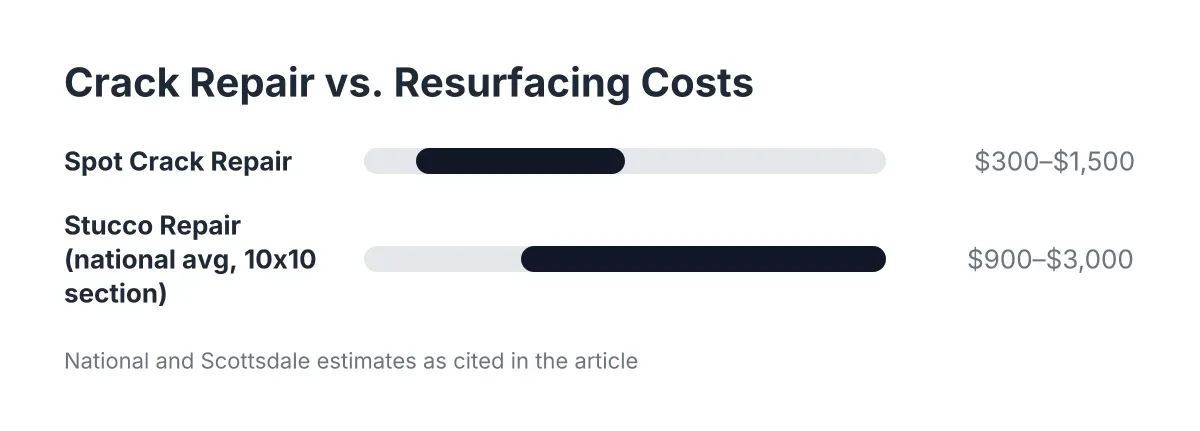
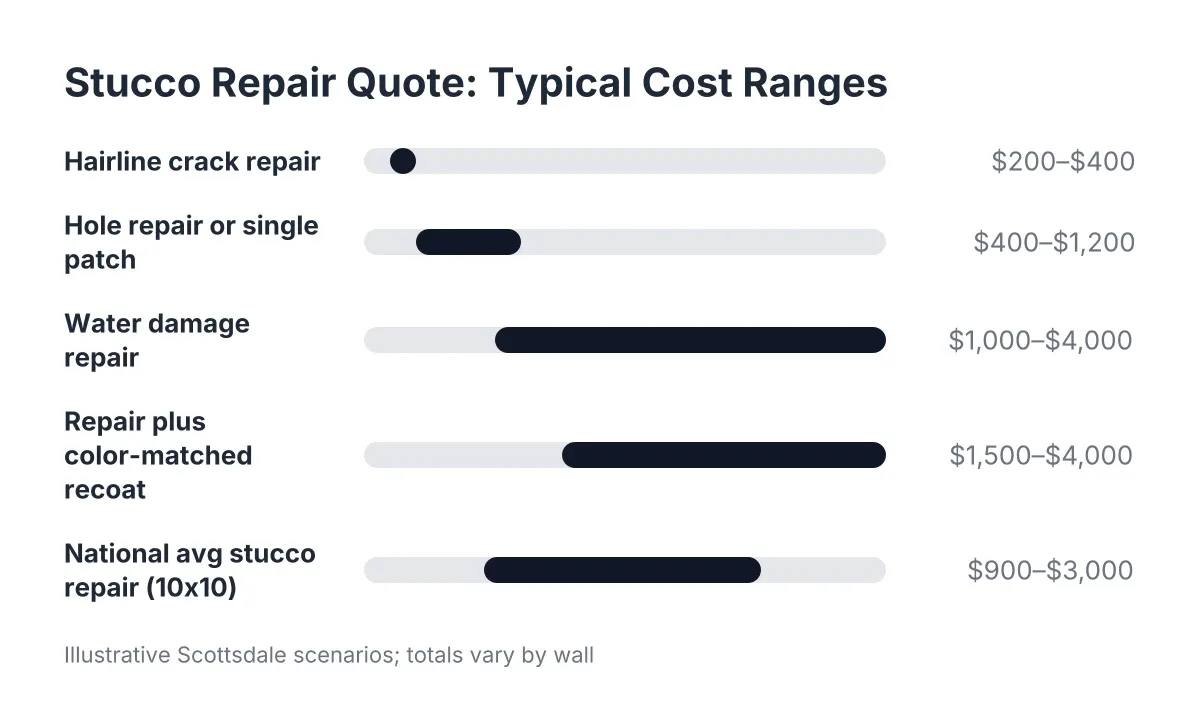
The national average cost to repair stucco runs $900 to $3,000, averaging around $1,700 for repairing buckled three-coat stucco in a 10×10-foot area, according to Fixr.com. Water damage work tends to land in the middle to upper part of that range, or above it, because the job involves more than the surface.
Here is why the stucco water damage cost climbs beyond a simple patch:
- Removal. All loose or buckling material must come off first. Leaving it in place lets rain keep expanding the damaged material underneath, which worsens the problem.
- Discovery. Nobody knows what the sheathing and paper look like until the stucco comes off. Quotes should state an assumption and a per-square-foot price for extra tear-out.
- Substrate repair. Wet or rotted sheathing gets replaced, and new building paper or weather barrier goes in before any new stucco.
- Rebuild in coats. Three-coat stucco needs cure time between coats. Labor spans multiple visits, not one afternoon.
- Color and texture matching. Matching a patch to weathered existing stucco takes skill and sometimes a full-wall recoat to hide the repair.
When you compare quotes, check each one against this list. A bid that is half the price of the others usually skipped removal or substrate repair, not labor cost. Ask directly: what happens to the price if you open the wall and find wet sheathing?
This matters in Arizona more than most places. Stucco remained the most-used exterior wall material in the Mountain division, which includes Arizona, at 48% of new single-family homes started in 2024, according to the National Association of Home Builders. Contractors here see water-damaged stucco constantly, so a quote with no plan for hidden moisture is a red flag, not a bargain.
Step 4: Decide Between Patching and Larger Replacement
Not every moisture problem demands tearing off a wall. Match the repair scope to the damage, not to the scariest quote you received.
A partial patch on a damaged corner is a quicker, cheaper alternative to full re-stuccoing. It works when the damage is localized, the paper behind it is intact, and you fix the underlying cause, whether that is vibration from equipment or poor drainage. Skip the cause, and the crack returns.
Full replacement or resurfacing makes sense when damage covers large areas, the stucco has delaminated across a wall face, or multiple patch repairs have already failed. As a rough illustrative range, patch-scale water damage stucco repair often runs in the low thousands, while opening and rebuilding a full wall face can run several times that. Treat those as planning figures, not quotes; your wall sets the price.
A Hypothetical HOA Scenario Worth Walking Through
Suppose an HOA board in north Scottsdale gets a reserve-study note flagging staining and soft stucco along 40 feet of a shared perimeter block wall near a drip line. The board requests three bids. One contractor quotes a skim coat over the stains. Another quotes removal of the damaged finish, repair of the affected area, and a color-matched recoat of the full wall section, plus a recommendation to move the irrigation emitters. The third quotes full demolition and re-stucco of the entire run.
In that scenario, the middle bid is usually the right scope. The skim coat hides the symptom and fails. The full demolition pays for work the wall may not need. Additionally, the middle bid fixes the damage, addresses the water source, and solves the matching problem by recoating to a natural break point. Boards comparing bids should score scope first and price second.
Step 5: Budget for Color and Texture Matching
Water-damaged areas get repaired in patches, and patches are visible unless the finish matches. Weathered stucco has faded under years of Arizona sun, so fresh material in the original color reads darker and newer. Expect one of two line items on an honest quote: custom color matching to the weathered tone, or a recoat of the full wall plane so the whole surface ages together.
For block-wall owners, the same logic applies in reverse. If you are having stucco installed on a new block wall or addition to match the house, the installer should match the existing texture and the weathered color, not the color the house was 15 years ago. That matching work is part of why stucco costs vary between a bare-block installation and a repair on existing stucco; they are different processes with different prep, even when the finished look is identical.
Step 6: Spend on Prevention So You Never Repeat Step 3
The cheapest water damage stucco repair is the one you prevent. After the repair, put a small annual budget toward keeping water off and away from the wall.
- Walk the walls once a year, ideally after monsoon season, and seal hairline cracks before they widen
- Keep sprinkler and drip emitters pointed away from stucco surfaces
- Maintain gutters and scuppers so roof water lands in drainage paths, not on wall faces
- Keep soil graded away from the foundation; pooled water near the base causes settling that cracks corners
- Clean shaded, damp walls before growth becomes thick and embedded; deeply embedded growth can take more than one treatment
- Never pressure wash stucco at high pressure; use low pressure or a gentle rinse
For an HOA, these items translate into a short annual maintenance line in the reserve budget. A few hundred dollars of crack sealing and drainage checks each year protects walls that would cost five figures to rebuild.
When to Bring in a Professional
Surface staining and a single hairline crack are reasonable for a careful homeowner to monitor and seal. However, once you see soft stucco, bulging, recurring stains, or any sign that water has reached the layers behind the finish, stop guessing and have the wall opened and inspected. Moisture inside a wall assembly cannot be judged from the outside, and repairs to building paper, sheathing, and framing are not do-it-yourself work. An honest estimate for how to repair stucco water damage always starts with finding out how deep the water went, and that answer lives behind the stucco, not on top of it.
If you need stucco repair, Scottsdale Stucco Repair can help.
Prefer to talk it through? Call (480) 637-3464 — a quick call is usually the fastest way to get a straight answer for your situation.