Stucco Installation Cost in Scottsdale: Pricing Block Walls, Additions, and New Work
If you have a bare cinder block wall, a new fence, or a room addition that the builder left unfinished, you have probably noticed that quotes for the same job can vary by thousands of dollars with no explanation. This guide breaks down stucco installation cost in Scottsdale, AZ so you can budget the work, read a quote line by line, and know when a number is fair. We will cover what installation includes, how it differs from repair pricing, what drives the price per square foot up or down, and how to compare two quotes that look nothing alike.
Stucco is not a niche finish here. According to the National Association of Home Builders, stucco was the most-used exterior wall material in the Mountain division, which includes Arizona, at 48% of new single-family homes started in 2024. That means plenty of contractors do this work, which is good for you. It also means quality and pricing vary widely, which is why the breakdown below matters.
What Stucco Installation Actually Includes
A proper stucco installation is a layered system, not a single coat of material troweled onto a wall. Understanding the layers is the fastest way to understand why one quote costs more than another, because cheaper quotes often skip or thin out a layer you cannot see once the job is done.
On a framed wall, such as a new room addition with sheathing, the assembly starts with a moisture barrier like tar paper. Metal lath or chicken wire gets fastened over that barrier, with the edges trimmed using channel that allows for expansion and contraction. Only then does the stucco itself go on.
Traditional stucco goes on in three coats. First comes the scratch coat, a thin layer scored with grooves so the next layer can grip it. Next is the brown coat, which builds thickness and flattens the wall. Last is the finish coat, which carries the color and texture you actually see. Each coat needs time to cure before the next one goes on, which is why a real three-coat job takes days, not hours.
On a concrete or cinder block wall, the process changes. Block is already a solid masonry surface, so in many cases the lath and paper step is reduced or skipped, and the stucco bonds to the block directly or over a bonding treatment. Fewer layers can mean a lower price per square foot than stuccoing a framed wall. That is the first answer to a question block-wall owners ask constantly: yes, stuccoing block is a different process than repairing existing stucco, and it is usually priced differently too.
A complete installation quote should include:
- Surface preparation, including cleaning the block and scraping off any loose burrs or rough spots so the new coats bond properly
- Moisture barrier and lath on framed surfaces, or a bonding agent where needed on block or previously painted surfaces
- The scratch and brown coats, with cure time between them
- The finish coat in your chosen texture and color
- Masking and protection for windows, gates, pavers, and landscaping
- Cleanup and haul-away of debris
Items that are often extra, and should be listed separately if they apply: demolition of old material, repairs to damaged block or framing underneath, paint on top of the finish coat, and scaffolding for walls over one story.
Stucco Installation Cost in Scottsdale, AZ: How Pricing Breaks Down
Stucco installation cost in Scottsdale is almost always quoted per square foot of wall surface, and the per-foot number moves based on five factors: the substrate, the wall height and access, the number of coats, the finish texture, and the total size of the job. Small jobs carry a higher per-foot rate because setup, mixing, and cleanup cost the same whether the crew coats 80 square feet or 800.
Here is how each factor shifts the number.
Substrate. Block walls and fences are typically the cheapest surface to stucco because the masonry itself provides the structure. Framed walls need paper and lath first, which adds material and labor. Previously painted surfaces, such as an old painted block fence, usually need a bonding agent because paint resists the new mud; that adds a step and some cost.
Height and access. A 6-foot backyard block fence the crew can reach from the ground costs less per foot than a two-story addition wall that needs scaffolding. Tight side yards, pool decks, and gravel slopes that complicate staging also show up in the price.
Number of coats. A full three-coat system costs more than a single dash or skim coat over sound block. For a block fence that just needs to look finished, some contractors will propose a one- or two-coat approach. That can be a legitimate way to save money, but make sure the quote says exactly how many coats you are getting, because this is the single most common reason two quotes for the same fence differ sharply.
Finish texture. Smooth and fine sand finishes take more skill and more passes than a heavier lace or dash texture. If your house has a smooth santa-barbara-style finish and you want the new wall to match, expect to pay more per foot than for a standard lace finish.
Job size. As an illustrative estimate, a homeowner stuccoing a long run of block fence, say 400 to 600 square feet of surface, will usually see a lower per-foot rate than a homeowner finishing one 10-foot accent wall, even though the total bill is higher.
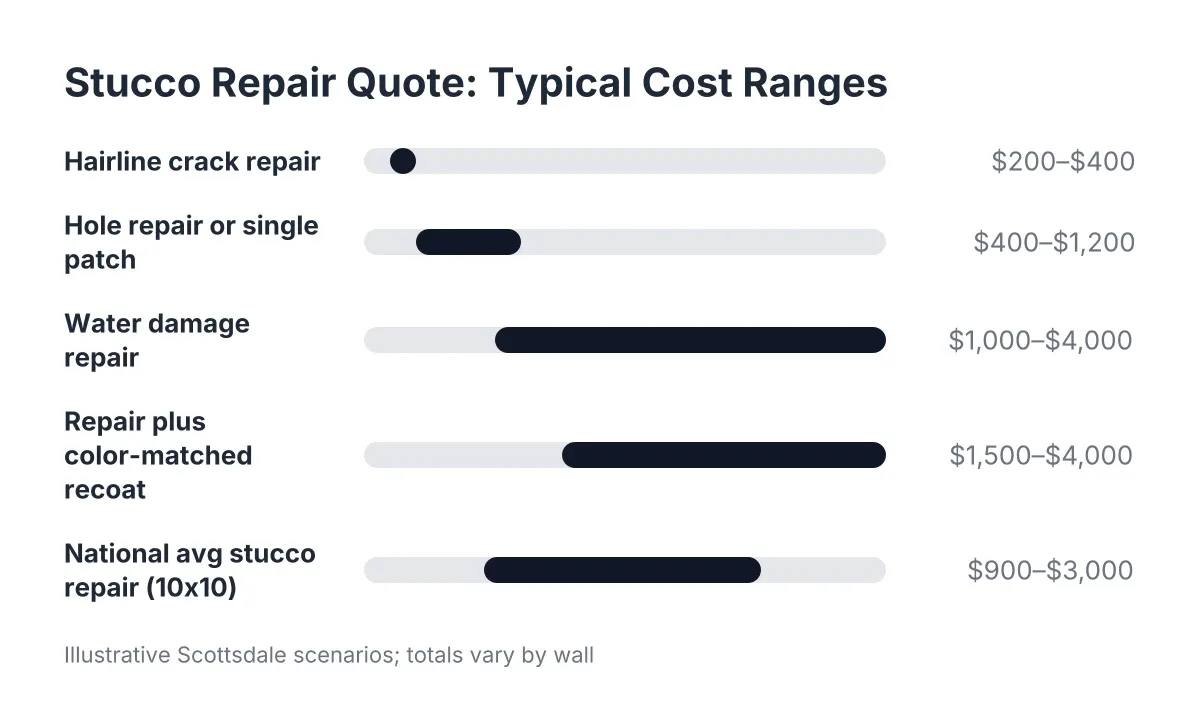
Because stucco costs span everything from a $300 patch to a five-figure whole-house replacement, it helps to know where installation on block typically lands. For most Scottsdale block wall, fence, and single-addition projects, the realistic budget range as of 2026 falls somewhere in the low hundreds to the mid thousands depending on square footage and finish. Treat any quote without a square footage measurement attached to it with suspicion.
Is Stuccoing a Block Wall Installation or Repair?
Stuccoing a bare concrete or cinder block wall counts as installation, not repair, because you are applying a new stucco system to a surface that has never had one. Repair pricing applies when existing stucco is cracked, holed, or water damaged and a contractor patches or replaces sections of it. The two are quoted differently, so knowing which one you need keeps your quotes comparable.
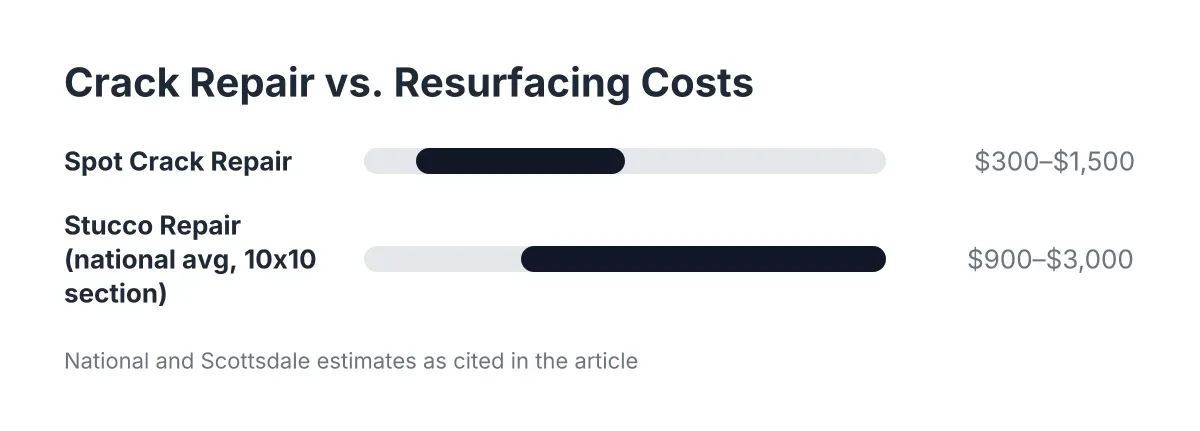
This distinction matters for your budget. Repair is priced around the damaged area plus matching work. For reference, Fixr.com puts the national average cost to repair stucco at $900 to $3,000, averaging about $1,700 for a buckled three-coat section in a 10×10-foot area. Installation on block is priced on total surface area and coat count, so a large fence can cost less per foot than a small repair even if the total is higher.
There is a gray zone. Suppose your contractor built an addition and tied new block into an existing stuccoed wall. Finishing the new block is installation, but blending the new finish into the old stucco at the seam is matching work, closer to repair in skill and pricing. A good quote will call that transition out as its own line rather than hiding it in the square-foot rate.
Why Scottsdale Quotes for the Same Wall Vary So Much
Two quotes for the same block fence can differ by 50% or more, and the gap almost always traces back to scope, not greed. One contractor is pricing a one-coat dash finish; the other is pricing surface prep, a bonding agent, two coats, and a texture match to your house. Neither is lying. They are quoting different jobs.
The fix is to make every bidder price the same scope. Before you collect quotes, decide and write down:
- The exact surfaces to be stuccoed, measured in square feet if you can
- The number of coats you want, or ask each bidder to state theirs
- Whether the finish must match the existing texture and color on your house
- Whether paint is included or you will paint separately
- Who handles prep issues like efflorescence, old paint, or damaged block
Color and texture matching deserves its own line in that list because it is the block-wall upgrader's biggest worry. New stucco will not look identical to 20-year-old sun-weathered stucco on day one even with a perfect color match, because the old finish has faded and the new one has not. An honest contractor will tell you that upfront and may recommend matching the texture precisely, then painting both old and new surfaces for a uniform color. Budget for that conversation; it changes the total.
Scottsdale's climate also plays a role in scheduling and pricing. Stucco coats need to cure, and summer surface temperatures here are brutal on fresh mud. Crews often start at dawn in July and August, or push flexible jobs to fall and spring, so timelines can stretch in peak heat. A multi-day schedule for a three-coat job is normal and is a sign the contractor is letting coats cure properly, not padding the clock.
What Drives Stucco Installation Cost Beyond the Square Footage
Beyond the per-foot rate, a handful of line items move the final number on Scottsdale installation jobs, and they are worth checking on every quote. These are the items that turn a clean estimate into a surprise invoice when they are left unspoken.
Wall caps and details. Block fences often get a rounded or squared mortar cap on top. Caps, pilaster columns, corners, and decorative reveals are labor-intensive details priced separately from flat wall area.
Gates, penetrations, and edges. Every gate frame, light fixture, hose bib, and wall termination needs trim channel and careful hand work. A fence with six penetrations costs more than a blank run of the same length.
Repairs discovered during prep. Cracked block, failed mortar joints, or water damage at the base of a wall must be fixed before stucco goes on, or the new finish fails with it. Ask how the contractor prices discovered repairs: by change order with your approval is the answer you want.
HOA requirements. Many Scottsdale HOAs require bare block to be finished and specify approved colors or textures. If your trigger for this project is an HOA letter, get the approved specs in writing before quoting; a redo in a different color is the most expensive version of this job.
Permits. Most standalone stucco finishing on an existing wall or fence does not involve structural work, but additions and new walls may already carry permits from the original construction. Confirm with your contractor whether your specific project needs anything filed with the city, since requirements depend on the scope of the underlying structure.
DIY Patching vs. Hiring Out the Install
A homeowner can reasonably handle a small cosmetic patch; a full installation over block is a different animal. Materials for a small patch, including patch compound, latex additive, and corner mesh, are stocked at general hardware stores, and pre-mixed bags make small jobs manageable without mixing raw ingredients. If you have a golf-ball-sized ding in an out-of-the-way spot, a careful DIY patch is a fair call.
However, applying scratch and brown coats across a full wall is harder than it looks, and it is the step where DIY installs fail. The coats must go on at consistent thickness, cure on schedule, and bond to a correctly prepped surface. Work should proceed from the bottom of the wall upward, loose material must be scraped off first, and painted block needs a bonding agent or the new mud will not hold. Get any of that wrong across 300 square feet and you pay twice: once for materials, once for the pro who redoes it.
Call a professional without hesitating when you see these signs on existing stucco near the project area: cracks wider than a credit card, soft or bulging spots, staining at the base of a wall, or any damage near windows and rooflines where water can get behind the finish. Those point to water damage, and stucco over a wet or failing substrate traps the problem instead of fixing it. A limitation worth naming here: no article can diagnose your specific wall, so if you suspect water intrusion or structural movement in the block itself, have someone look at it in person before you spend money on finish work.
How to Read a Quote and Choose a Contractor
A fair installation quote names the square footage, the number of coats, the finish texture, and what prep is included, all in writing. If a quote is one number on one line, you cannot compare it to anything, and you cannot hold anyone to it later. That single habit, demanding an itemized scope, eliminates most pricing surprises in this trade.
When you talk to bidders, three questions separate the pros from the rest:
- How many coats are you applying, and what is in each one? You want a specific answer that names the scratch, brown, and finish coats, or a clear explanation of why a reduced system suits your block wall.
- How will you match the texture and color of my house? Listen for a sample patch or test area, and for honesty about weathered color. A contractor who promises an invisible color match against 15-year-old stucco without mentioning paint is overpromising.
- What happens if you find damage under the surface? The right answer involves showing you the problem and pricing the fix before proceeding, not absorbing it silently or billing it silently.
On timing, expect a small block fence job to run a few days including cure time between coats, and an addition or larger wall to run longer. Exact duration depends on coat count, weather, and crew scheduling, so get the expected timeline in the quote rather than assuming.
For a typical Scottsdale block-wall project, getting two or three itemized quotes is worth the week it takes. The spread between them, once you normalize the scope, tells you where the fair market price sits for your specific wall. That is the whole point of understanding stucco installation costs in Scottsdale before you sign anything: you stop comparing mystery numbers and start comparing scopes of work.
If you have a bare block wall, a new fence, or an addition in Scottsdale that needs stucco installed and matched to the rest of your home, reach out for an estimate. Describe the wall, send a few photos and a rough measurement, and you will get a scoped number you can compare line by line against anything else you have collected.
If you need stucco repair, Scottsdale Stucco Repair can help.
Prefer to talk it through? Call (480) 637-3464 — a quick call is usually the fastest way to get a straight answer for your situation.