Cost to Repair a Stucco Hole in Scottsdale: Pricing by Size and Depth
The cost to repair a stucco hole depends on two things more than anything else: how big the hole is, and how deep the damage goes. A golf-ball-sized ding from a weed trimmer is a different job than a fist-sized hole where water got behind the wall and rotted the lath. This guide walks through how to size up the damage yourself, what each tier of repair involves, and where the money actually goes, so a quote from a Scottsdale contractor makes sense instead of feeling like a number pulled from thin air. Understanding stucco hole repair pricing helps you budget confidently before picking up the phone.
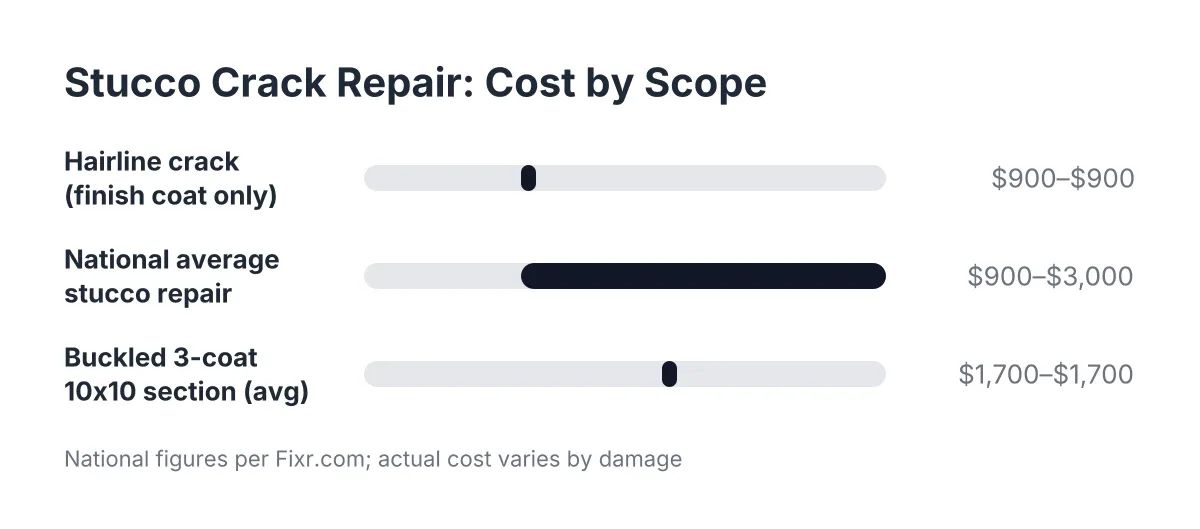
For context, the national average cost to repair stucco runs $900 to $3,000, averaging around $1,700 for repairing buckled three-coat stucco in a 10×10-foot area, according to Fixr.com. Most single-hole repairs land below that range because the damaged area is smaller. The steps below show you how to figure out where your wall falls.
Step 1: Measure the Hole and Probe the Depth
Before you call anyone, take five minutes with a tape measure and a screwdriver. Measure the visible hole across its widest point. Then press gently around the edges with your fingers or the screwdriver handle.
Here is what you are checking for:
- Surface only: The hole is shallow, the stucco around it feels solid, and you can see intact material behind the opening.
- Through the base coat: You can see wire mesh (lath) or black paper behind the hole.
- Through to the structure: You can see wood framing, sheathing, or bare block, or the paper behind the mesh is torn or stained.
- Soft or hollow surrounding area: The stucco around the hole sounds hollow when tapped, or gives under light finger pressure.
That last one matters most. A patch that feels weak or hollow, or that a light press can puncture, means the material behind it has failed. A contractor cannot patch over that; the bad section has to be broken out and rebuilt, which changes the price.
Step 2: What Drives Stucco Hole Repair Pricing Factors
The cost to repair a stucco hole is driven by depth first, size second, and finish work third. A deep hole forces the contractor to rebuild layers: paper, lath, scratch coat, brown coat, and finish coat. A shallow hole may only need one layer. Finish work, meaning texture and color matching, adds labor regardless of hole size.
Here is the practical breakdown of what moves a quote up or down in 2026:
- Depth of damage. Each layer that has to be rebuilt adds material and, more importantly, cure time between coats.
- Total repair area. The break-out area is always larger than the hole itself. Solid, well-bonded stucco around the hole keeps the repair small.
- Water damage. Staining, soft lath paper, or rot behind the hole means the repair includes weatherproofing work, not just patching.
- Texture and color matching. Scottsdale homes carry everything from sand finish to heavy lace. Matching a weathered 20-year-old texture takes more skill than floating a smooth patch.
- Wall construction. Stucco on frame behaves differently than stucco over block. Frame walls have paper and lath that must be lapped correctly; block walls bond directly, which changes both the process and the labor.
- Access and location. A hole at eye level on a garage wall costs less to reach than one under a second-story eave.
If you are wondering whether stucco repair is expensive compared to other exterior work, the honest answer is that small hole repairs are among the cheaper exterior fixes. The price climbs when water damage or failed old patches expand the scope.
Step 3: Match Your Hole to a Repair Tier
Once you know the size and depth, you can place the job in one of three tiers. These illustrative ranges are estimates for a typical Scottsdale repair, not quotes; your wall, access, and finish will move the number.
Small and Shallow: Under 3 Inches, Surface Layer Only
Suppose a landlord in south Scottsdale finds a chip the size of a quarter next to a hose bib during a turnover walk-through. The finish coat is gouged but the base is intact. A repair like that involves cleaning the edges, applying patch compound, and texturing to match. As an estimate, jobs in this tier often run a few hundred dollars, with most of the cost being the trip and the texture match rather than material. For basic surface damage like this, stucco hole repair pricing often reflects minimal material costs.
Materials for a patch this size, including patch compound and latex additive, are stocked at general hardware stores. The catch is the finish. A patch that holds but shows a flat, mismatched texture is the classic sign of a repair done without matching the original technique. On a rental, that mismatch is exactly what draws the next HOA letter.
Medium: 3 to 12 Inches, Through the Base Coat
At this depth you can see mesh or paper behind the hole. The repair now means cutting back to solid stucco, repairing or tying in new lath, and rebuilding the scratch, brown, and finish coats. Each coat needs cure time, so this becomes a multi-visit job even though the hole looks modest.
One detail worth knowing: a clean, straight grinder cut around the hole is not what the repair contractor wants. The wire lath needs to stay exposed and torn at the edges so the new patch can be tied in and weatherproofed properly. A clean cut forces the contractor to open up more wall, which adds cost. If you are tempted to "prep" the hole yourself, leave the edges rough. Understanding how stucco hole repair pricing changes with depth will help you avoid requesting unnecessary preparation work.
Large or Deep: Over 12 Inches, or Water Damage Behind the Wall
When the hole exposes framing, or the surrounding stucco sounds hollow across a wide area, the job shifts from patching to partial replacement. Corners are a common example. The technically correct fix for a deteriorated corner is to remove the stucco and repatch the full wall section from corner to corner, because a spot patch on a corner rarely blends and rarely lasts.
A proper corner rebuild also includes reinforcement. Contractors drill holes on both sides of the corner and tie rebar wire through to join the patched sections, so the new stucco does not crack away from the old. Repair material goes on from the bottom of the section upward. This tier is where the Fixr.com average range of $900 to $3,000 becomes realistic, and water damage repair behind the stucco pushes toward the top of it.
Step 4: Check Whether an Old Patch Is Part of the Problem
Many Scottsdale walls carry a previous repair, and a failed one changes your budget. Tap the area around the hole and any visible old patches. A hollow sound, or a patch you can dent with a thumbnail, means the earlier patch material or application failed. Surface repair over a failed patch fails again; the section needs to be broken out and redone, and your quote should reflect that.
Also look for the cause behind the hole. A hole from a doorknob or a moving mishap is a one-time event. A hole that opened along a crack, near a downspout, or where sprinklers hit the wall points to vibration, drainage, or water problems. Fix the cause too, or you will pay for the same repair again next year.
Step 5: Know How Wall Type Changes the Repair Cost
If you own a bare block wall, fence, or addition, the math is different, and it is worth understanding why before you compare quotes. A hole in stucco on frame involves layers: building paper, wire lath, and three coats over a wood structure. Repairing it means restoring the weather barrier, not just filling a void.
A block wall skips the paper and lath. Stucco bonds directly to the masonry, so a chip or hole in stuccoed block is usually a simpler patch. However, if your block wall or new addition has never been stuccoed at all, that is not a repair job. Covering bare block for the first time is Stucco Installation, priced by the square foot rather than by the hole, and quoted as a separate scope. Knowing which side of that line your project sits on saves an awkward conversation when the estimator arrives.
There is a reason this trade is deep in Arizona: stucco covered 48% of new single-family homes started in the Mountain division in 2024, according to the National Association of Home Builders. Local contractors here handle both frame and block work constantly, so a good estimator should identify your wall type on sight and explain how it affects the price.
Step 6: Get a Quote That Itemizes Size, Depth, and Finish
The fear behind most searches about stucco repair costs is not the number itself. It is the surprise, the quote that doubles mid-job, or the contractor who stops answering. You can protect yourself by asking for a quote broken into parts:
- Break-out area in square feet, not just "the hole"
- What is behind the wall: frame with paper and lath, or block
- Whether water damage repair or lath replacement is included
- Number of coats being rebuilt and cure time between visits
- Texture matching method and whether color matching or painting is included
- What happens to the price if hidden damage appears once the wall is open
That last line item is the honest one. No contractor can see behind the wall until it is open, and a written plan for hidden damage beats a verbal shrug. If a hole sits near electrical, gas, or plumbing penetrations, or the wall shows wide structural cracking rather than a simple hole, bring in a professional for evaluation before anyone starts breaking out stucco.
What a Fair Stucco Hole Repair Pricing Should Look Like
So how much should stucco repair cost for a hole? Measured against the tiers above: a small surface patch is a low-hundreds job, a medium hole through the base coat is a mid-hundreds to low-four-figure job across multiple visits, and a large or water-damaged section lands inside the $900 to $3,000 national range Fixr.com reports. If a quote for the repair cost on a stucco hole sits far outside its tier, ask which factor explains it: depth, a failed old patch, water damage, access, or a difficult texture match. A contractor who can answer that question in plain terms is the one worth scheduling.
If you need stucco repair, Scottsdale Stucco Repair can help.
Prefer to talk it through? Call (480) 637-3464 — a quick call is usually the fastest way to get a straight answer for your situation.