How to Find Stucco Color Matching Services in Scottsdale That Actually Hide the Patch
The fear behind every stucco repair is simple: you fix the crack, and six months later there is a lighter rectangle on your wall announcing exactly where the patch went. Good stucco color matching services exist to prevent that, but in Scottsdale the quality ranges from true color expertise to a worker holding up a paint chip in the shade and calling it close enough. Finding a qualified stucco color matching contractor is essential when you want to avoid that visible patch. This guide walks you through finding a contractor with real color-matching skill, step by step, whether you are a homeowner planning a full re-stucco or an HOA board collecting bids for a community perimeter wall.
Stucco is everywhere here, which is part of the problem. According to the National Association of Home Builders, stucco was used on 48% of new single-family homes started in 2024 in the Mountain division, which includes Arizona. That means plenty of contractors will say they do color matching. Far fewer can make a patch disappear on a wall that has baked in Sonoran sun for fifteen years.
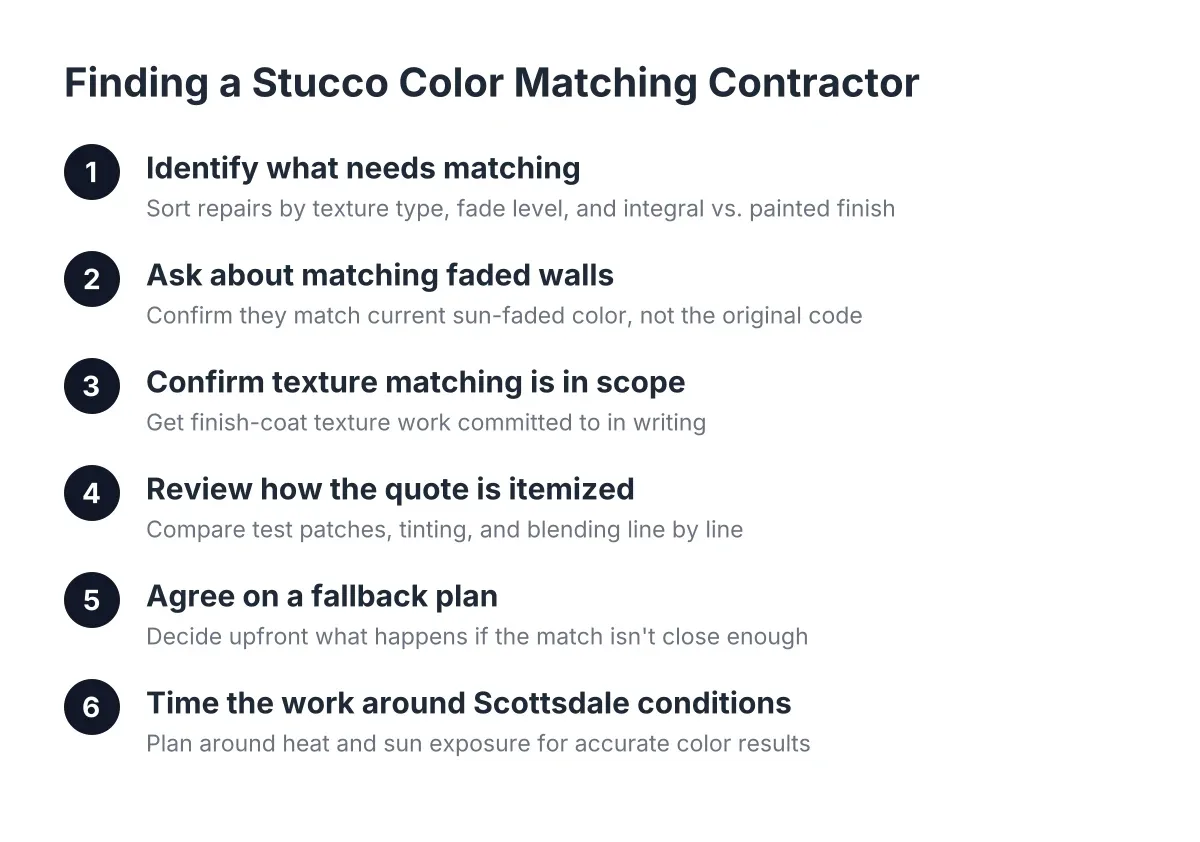
Step 1: Figure Out What You Actually Need Matched
Before you call anyone, walk your walls and sort the work into two buckets: the repair itself, and the finish that has to blend.
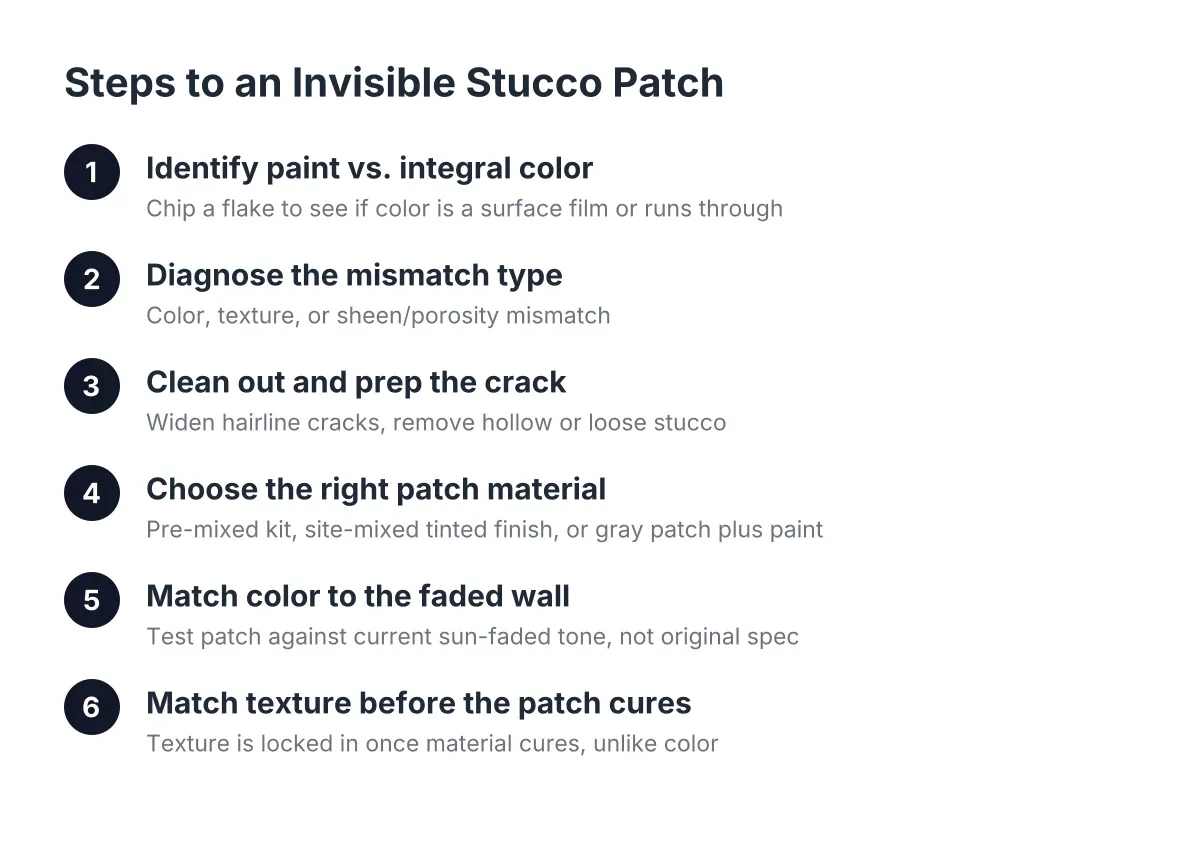
Matching has two halves, and both have to succeed. Color is one. Texture is the other, and texture is where most visible patches fail. A patch that matches the color but not the sand finish, lace pattern, or knockdown texture around it will still show after painting. Texture mismatch is cosmetic, not structural, but to a buyer, an appraiser, or an HOA resident filing a complaint, cosmetic is what they see.
Note three things for each damaged area:
- The texture type around the damage (smooth, sand float, lace, dash, knockdown)
- How much the surrounding color has faded, especially on south- and west-facing walls
- Whether the existing finish is integral color (pigment mixed into the stucco) or painted stucco
That last item changes the whole job. Integral color repairs need the new finish coat tinted to match a sun-faded original, which is harder than it sounds. Painted stucco gives the contractor a fallback: match the texture first, then repaint to blend.
Step 2: Ask How They Match a Faded Wall, Not a Fresh One
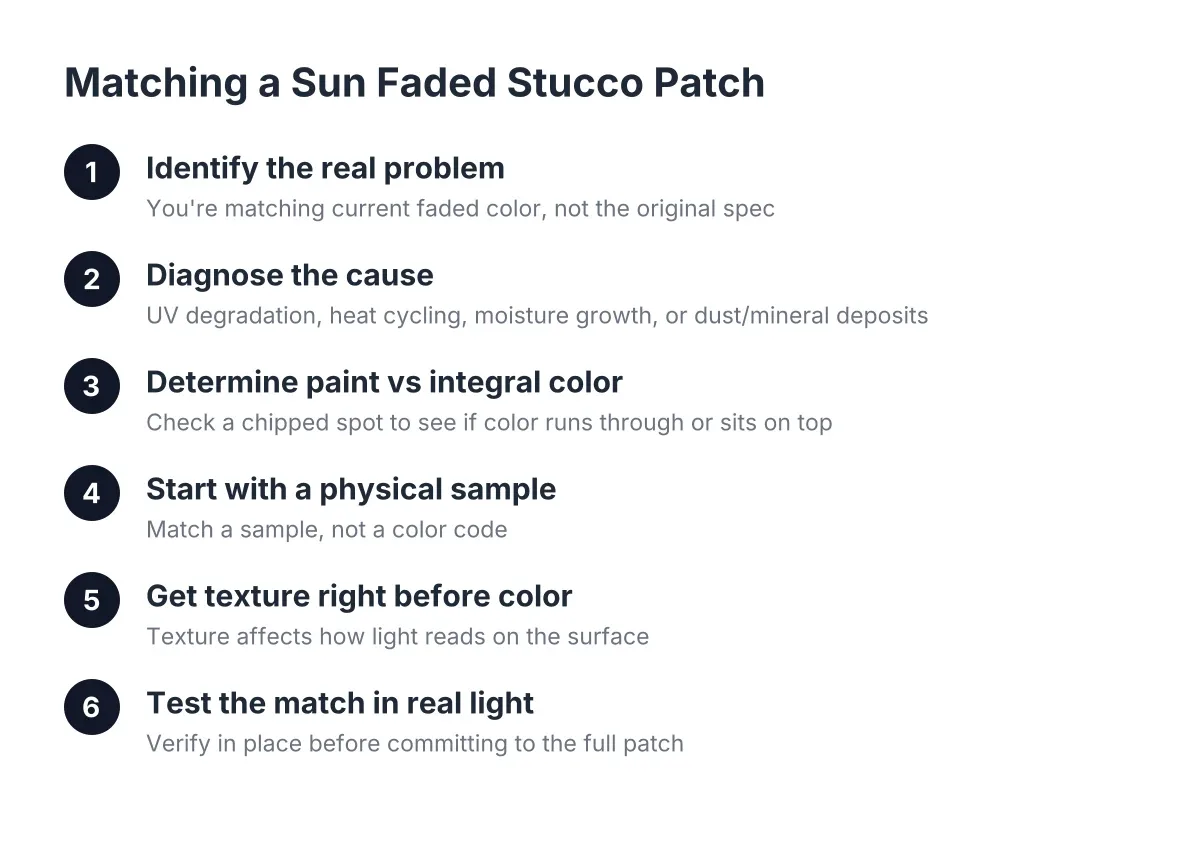
This is the question that separates color expertise from guesswork. Scottsdale sun fades stucco unevenly. The west wall of your house may be two shades lighter than the north wall, even though both started as the same color. A contractor who matches to the original manufacturer color code will produce a patch that matched the wall in 2009, not the wall today.
Listen for answers like these:
- They match to the wall as it is now, in natural daylight, not to a color name or an old code.
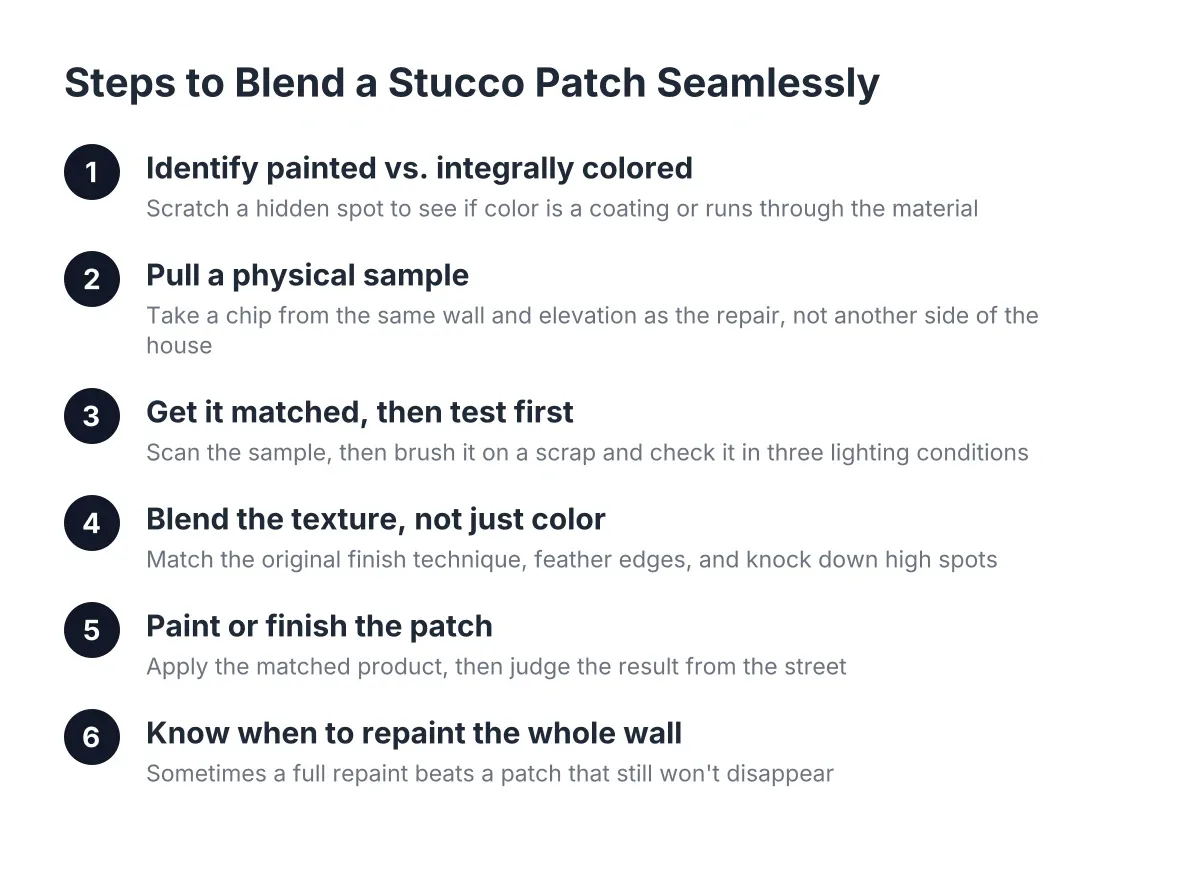
- On a wall with several shades of discoloration, they remove a small sample piece and match against it, rather than eyeballing from the sidewalk.
- They apply a test patch in an inconspicuous spot and check it dry, because wet stucco and dry stucco read as different colors.
- They can explain when integral color tinting will work and when painting the full wall section is the honest answer.
A contractor who skips the test patch is gambling with your exterior. On a $900 crack repair that gamble is annoying. On a full resurfacing job it is expensive to undo.
Step 3: Confirm Texture Matching for Stucco Color Is Part of the Scope
Ask directly: who on the crew does the finish work, and have they matched this specific texture before? A poor texture match on an old repair usually means a less skilled worker applied the patch without replicating the original finish technique. You want the person quoting the job to commit to texture matching in writing, not treat it as an afterthought.
Traditional stucco goes on in three coats: a scratch coat, a brown coat, and the finish coat that carries the color and texture. The finish coat is where matching lives. In addition, a skilled finisher can sometimes blend a slightly proud patch by knocking down and scraping high spots instead of tearing out the base coat, which saves money. Ask whether that is an option for your situation before approving a full redo of any patch.
For HOA boards, this matters at scale. Say a community has 1,200 linear feet of shared perimeter wall with cracking in a dozen spots. If the low bidder patches structurally but botches the texture, the board ends up fielding resident complaints and paying a second contractor to blend or repaint entire wall runs. The cheapest bid on a color-sensitive job is often the one that ignores matching entirely; that is frequently why one quote comes in at a third of another.
Step 4: How Stucco Color Matching Contractors Itemize the Quote
Big-project budgeters run into wildly different stucco quotes because contractors scope the finish work differently. One bid may include test patches, custom finish-coat tinting, and blending into adjacent wall sections. Another may stop at "patch and paint to match." Those are not the same job, and the price gap reflects it.
Ask each bidder to break out these items so you can compare apples to apples:
- Repair or replacement of the damaged stucco itself
- Finish coat application, with the texture type named
- Color matching method: integral color tint, paint match, or repaint of the full wall section
- Test patch and approval step before full application
- Any painting of attached fixtures, since conduit, light bases, and raceways mounted on the wall should be painted to match rather than left a different color
For scale on the repair side, Fixr.com puts the national average cost to repair stucco at $900 to $3,000, averaging around $1,700 for buckled three-coat stucco in a 10×10-foot area. Color and texture matching on a faded wall can add to that, because it adds skilled labor and sometimes a repaint of a larger area. A fair quote tells you which of those you are paying for. HOA boards gathering two or three bids for a board vote should require this itemization from every bidder; it is the only way a reserve-fund line item survives scrutiny.
Step 5: Agree on the Fallback Before Work Starts
Even skilled stucco color matching services hit walls, literally, where a perfect match is not achievable. Fifteen years of UV exposure, a discontinued finish product, or heavy efflorescence staining can make an invisible integral-color patch impossible. The honest fallback is painting the entire wall or a full section from corner to corner, so the eye sees one uniform plane instead of a patch.
Decide this upfront. Ask the contractor: if the test patch does not blend after drying, what happens, and what does the repaint cost? Getting that answer in the quote prevents the budget balloon that big-project homeowners fear most, where the estimate grows mid-job because nobody planned for the likely outcome. A properly matched and painted patch should become difficult to pick out from the surrounding surface; if the contractor cannot commit to that standard or a defined fallback, keep looking.
One limitation worth naming: if your walls show widespread bulging, soft spots, or water damage behind the stucco, color matching is the wrong first conversation. Those symptoms need a professional assessment of the underlying wall before anyone talks finish coats, because a beautiful color match over a failing substrate is wasted money.
Step 6: Time the Work Around Scottsdale Conditions
Desert conditions affect how a color match cures and reads. Finish coats applied in extreme summer heat can dry too fast and cure lighter or blotchier than the test patch predicted. Experienced local crews manage this by working shaded walls at the right time of day, misting, or scheduling finish work for milder months. When you interview contractors, ask how they handle curing in Scottsdale heat. A specific answer signals the kind of local color expertise this whole process is designed to find.
Expect the matching portion itself to add process time, not just labor time. A test patch needs to dry fully before you approve it, and rushing that step defeats its purpose. Build a few extra days into your project timeline for approval rounds, especially on HOA jobs where a board member or manager signs off.
What Good Stucco Color Matching Contractor Work Looks Like When It Is Done
Suppose a Scottsdale homeowner is prepping a house for sale in 2026 and has stair-step cracks patched on a west-facing wall that has faded from desert tan to a washed-out cream. A contractor with real color matching skill would sample the faded wall, replicate the sand-float texture, tint the finish coat to today's color rather than the builder's original, prove it with a dry test patch, and blend the edges so the repair reads as one continuous wall. If the match fell short, the quote already covered repainting that wall section corner to corner, so there would be no surprise invoice.
That is the standard to hold every bidder to, whether the job is one crack or a full resurfacing of the house. If you are in Scottsdale or the immediate surrounding area and want stucco repair with the color and texture matched to your existing walls, reach out for an estimate. Describe the damage, the wall orientation, and whether your stucco is painted or integrally colored, and you will get a straight answer about what it takes to make the repair disappear.
If you need stucco repair, Scottsdale Stucco Repair can help.
Prefer to talk it through? Call (480) 637-3464 — a quick call is usually the fastest way to get a straight answer for your situation.