Rapid Set Stucco Patching on Block Walls: How It Works and When to Use It
If you have a cracked block wall, a chipped stucco fireplace, or a fresh addition that needs to blend into your existing exterior, rapid set stucco patching is one of the fastest ways to fix the damage. It replaces the traditional multi-day, three-coat repair with a single application that can be ready for paint the same day. This guide walks through how it works step by step, where it holds up on concrete block, and where it falls short so you can decide whether to do it yourself or bring in a stucco repair contractor.
One note before the steps. Rapid set products are polymer-modified, which means one application can do the job of the old scratch coat and brown coat for repair work. That is why the material sets so fast and bonds so well to masonry. It is also why sloppy prep or slow hands cause most failures. The steps below account for both.
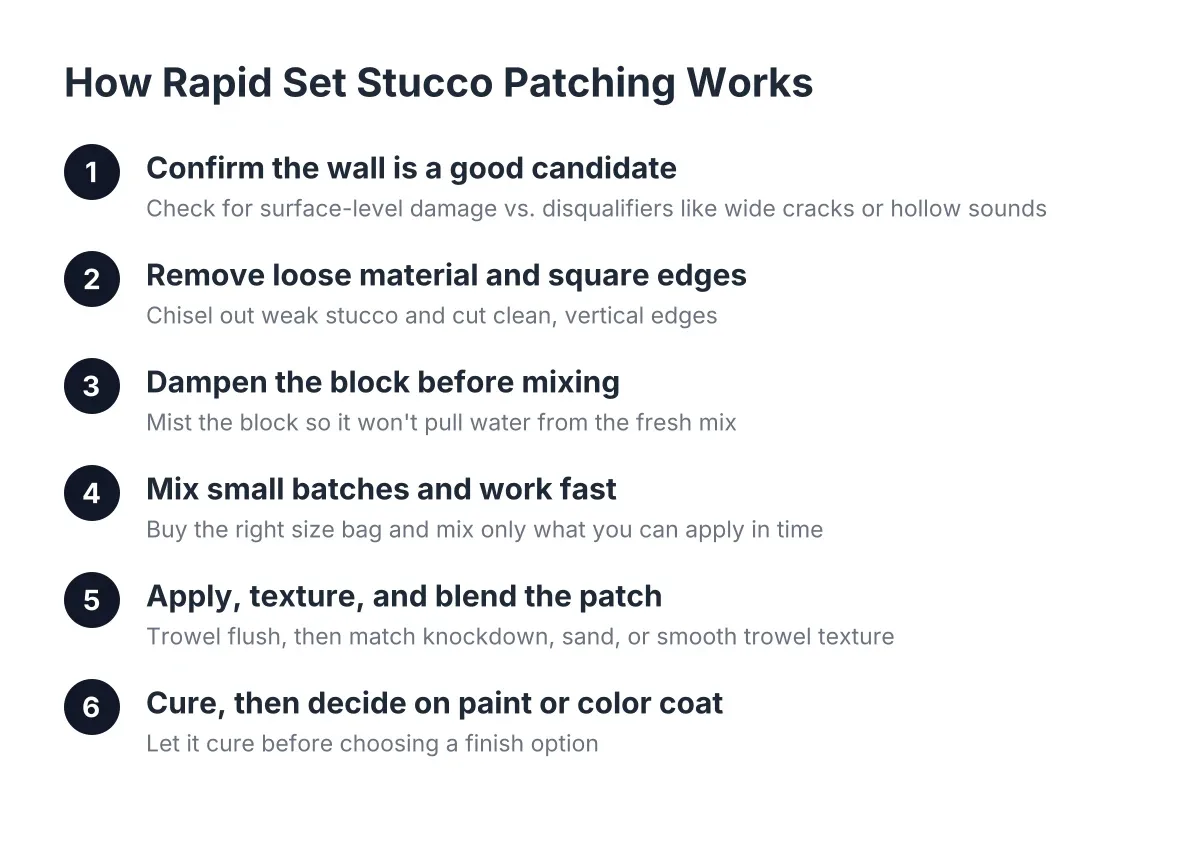
Step 1: Confirm the Block Wall Is a Good Candidate
First, check whether the surface actually suits a patch. Rapid set stucco patching works well on concrete block, cinder block, existing stucco, and masonry fireplaces. The block gives the patch a solid, rigid backing, which is exactly what fast-setting material wants.
So yes, you can stucco over cinder block, and you can patch existing stucco on it too. Stucco is not a niche finish here; it covered 48% of new single-family homes started in the Mountain division in 2024, according to the National Association of Home Builders. Block perimeter walls, patio walls, and fireplace surrounds are everywhere in Scottsdale, and most of them wear stucco.
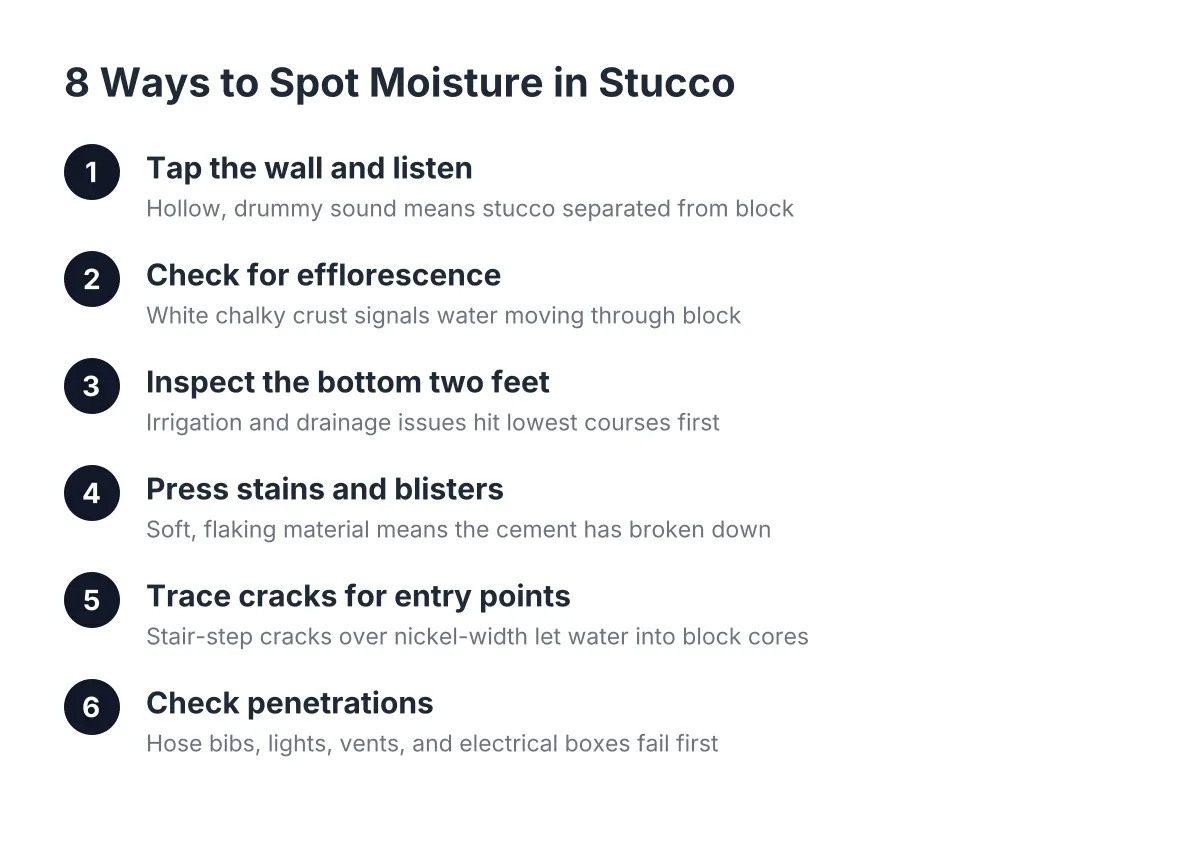
However, a patch is only the right call when the damage is surface-level. Walk the wall and look for these disqualifiers:
- Cracks wider than about a quarter inch that reopen after previous repairs, which usually point to movement in the wall or footing
- Stucco that sounds hollow when you tap it across a large area, meaning it has separated from the block
- Staining, efflorescence (white powdery residue), or soft spots that suggest water damage behind the surface
- Loose or shifting block, especially at the top course of a perimeter wall
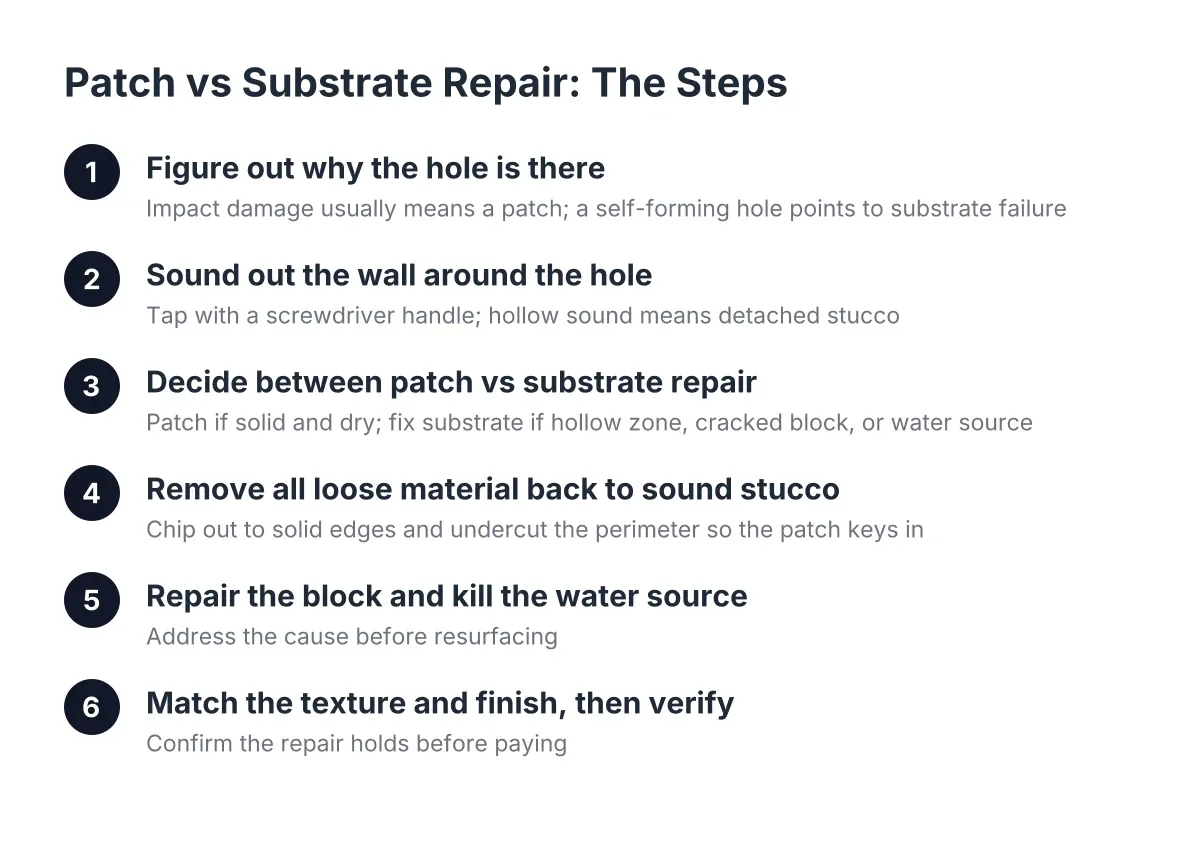
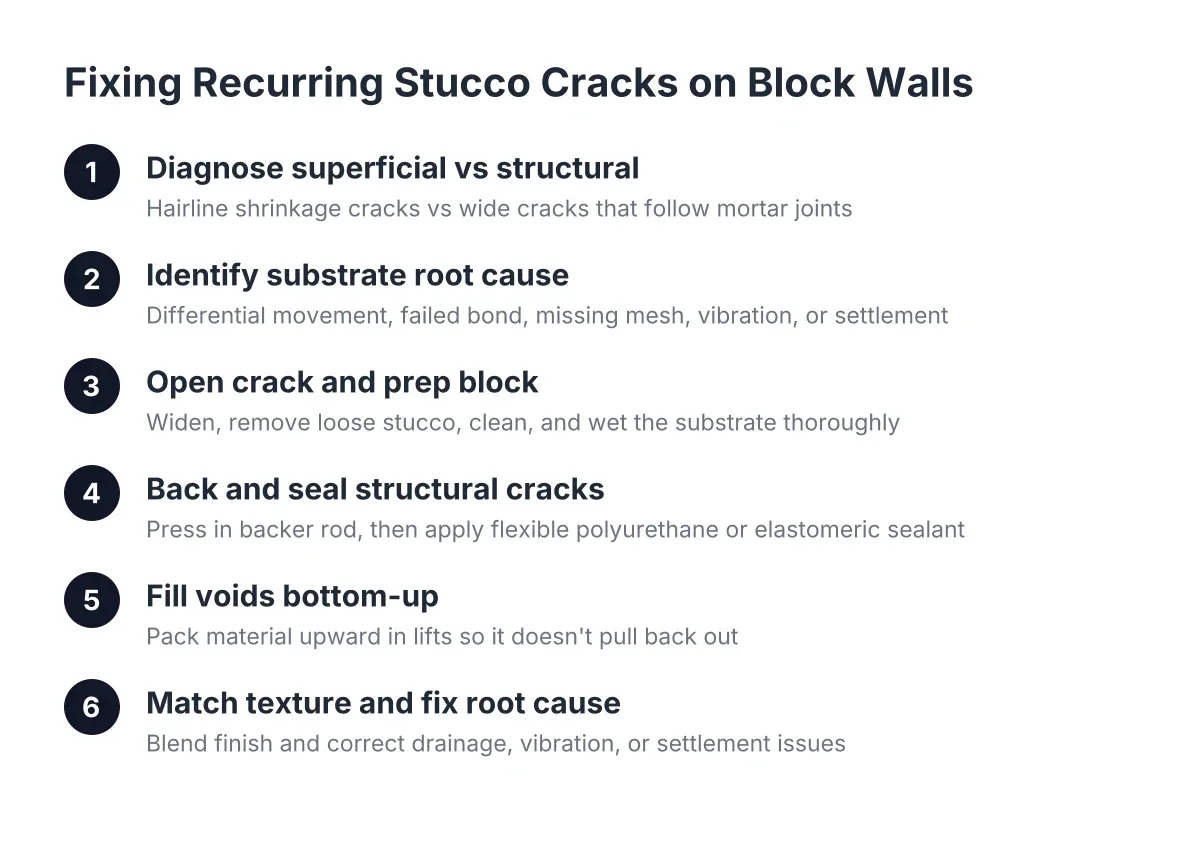
If you see any of those, patching over the symptom wastes material. The crack will come back. Recurring cracks on Stucco On Block Walls almost always trace to the substrate, drainage, or wall movement, and that is a diagnosis job for a professional, not a patch job.
Step 2: Remove Loose Material and Square Up the Edges
Next, chip out everything that is not solidly attached. Use a cold chisel and hammer, or a small angle grinder for larger sections. Work outward from the damage until you hit stucco that resists the chisel and sounds solid.
Then square up the edges of the repair area. A patch feathered onto a crumbly, tapered edge fails at that edge first. Cut back to clean, vertical edges so the new material locks into a defined pocket. On a hole repair, undercut the edges slightly so the patch keys in behind the old stucco.
Brush out all dust and debris. Fast-setting material grabs in minutes, and dust between the patch and the block is the number one reason a patch pops loose later.
Step 3: Dampen the Block Before You Mix Anything
This step gets skipped constantly, and it ruins patches in the desert. Dry concrete block is thirsty. If you trowel fresh material onto dry block, the block pulls the water out of the mix before it can cure, and the patch turns weak and chalky.
Therefore, mist the repair area with a spray bottle or hose until the block is damp but not dripping. In Scottsdale, do this twice on a hot day; the first pass flashes off fast. Damp substrate is cheap insurance, and it matters more here than in any humid climate the product instructions were written for.
For wide cracks in a block wall, this is also the point to install backer rod if needed. Backer rod is a closed-cell foam cord that creates a backing inside a deep crack before you fill it, according to Sika.
Step 4: Mix Small Batches and Work Fast
Now mix the patch material. Rapid set stucco patch comes in sizes from a 2 lb box up to 25 lb bags at hardware stores like Home Depot, Lowe's, and Sherwin-Williams, so buy for the size of your repair, not the whole wall. Follow the water ratio on the bag exactly; extra water weakens fast-setting cement more than it weakens conventional stucco.
Mix only what you can apply in the stated working time. As a comparison point for how unforgiving catalyzed repair products can be, some body-filler-type materials begin setting within about 2 minutes of mixing, according to 3M. Stucco patch gives you more time than that, but the principle holds: a big bucket mixed all at once hardens before you finish troweling it.
One more judgment call. If your patch spans a void without solid backing behind it, mix stiffer and richer than the bag minimum. A patch bridging a gap needs its own strength because the block is not carrying it.
Step 5: Apply, Texture, and Blend the Rapid Set Stucco Patch
Trowel the material firmly into the repair, pressing it into the edges and the block face. On most rapid set products, no bonding primer is required over existing stucco or masonry, which is one of the real advantages over traditional repair methods. Fill flush with the surrounding surface, then move straight to texture.
Texture matching is where DIY patches announce themselves. Common approaches on Scottsdale block walls:
- Knockdown or dash: flick or spray finish material onto the fresh patch, wait until it firms slightly, then lightly trowel the peaks down to blend with the wall.
- Sand or float finish: rub the surface in circles with a rubber float once it starts to set.
- Smooth trowel: keep working the surface with a clean steel trowel as it tightens.
Match the surrounding wall, not the picture in your head. Step back ten feet and compare in raking light. The same techniques apply to a stucco parapet wall or a masonry fireplace surround; the material does not care whether it is on a garden wall or a firebox chase.
Suppose a Scottsdale homeowner has a room addition at the exterior finish stage, with new block walls meeting a 20-year-old sand-finish house. In that scenario, rapid set stucco patching handles the transition seams and any dings from framing and rough-in, but the new walls themselves need a full stucco installation with color and texture matched to the original. A patch product blends repairs; it does not skin an entire addition.
Step 6: Cure It, Then Decide on Paint or Color Coat
Fast-setting means paintable fast, often within hours per the manufacturer's data sheet, but Arizona sun changes the math. Shade the patch or mist it lightly during the first hours on a 100-degree day so it cures instead of drying out.
Then evaluate the match honestly. A textured patch on an unpainted, integrally colored wall will show, because cured patch material rarely matches weathered color coat. The standard fallback is to paint the full wall section, corner to corner, so the eye sees one uniform plane instead of a fresh gray rectangle. On a prominent surface like a front courtyard wall or fireplace, professional stucco color matching and texture matching is usually the difference between invisible and obvious.
When Rapid Set Stucco Patching Is Enough, and When to Call a Pro
Rapid set stucco patching is enough for hairline cracks, chips, small holes in a wall, and cosmetic damage on solid block. It is not enough for structural cracks, water damage, delaminated stucco, or a badly deteriorated corner. The honest fix for a crumbling corner is removing the stucco and repatching the full section from corner to corner, not dabbing compound on the worst spot.
Cost context helps the decision. For reference, the national average cost to repair buckled three-coat stucco in a 10×10-foot area runs $900 to $3,000, averaging about $1,700, according to Fixr.com. A DIY patch costs a fraction of that, which is exactly why it is worth trying on small cosmetic damage first, and why a rock-bottom quote to "patch" a large failing wall should make you suspicious.
If you are vetting contractors in 2026, ask three things: whether they will diagnose the cause of the crack before quoting a fix, whether the written scope specifies patch versus remove-and-replace for each area, and how they plan to match your existing color and texture. A fair quote names the repair method, the area covered, and the finish. A vague one-line price does not.
For small stuff, grab a bag and follow the six steps above. For anything involving water damage, recurring cracks, structural movement, or an addition that needs new stucco matched to your existing walls, get a local Scottsdale stucco repair estimate before you spend a weekend on a patch that will not hold. Reach out for a written scope and quote on your block wall, fireplace, or addition, and get a straight answer on whether a patch is enough or the wall needs more.
If you need stucco repair, Scottsdale Stucco Repair can help.
Prefer to talk it through? Call (480) 637-3464 — a quick call is usually the fastest way to get a straight answer for your situation.